
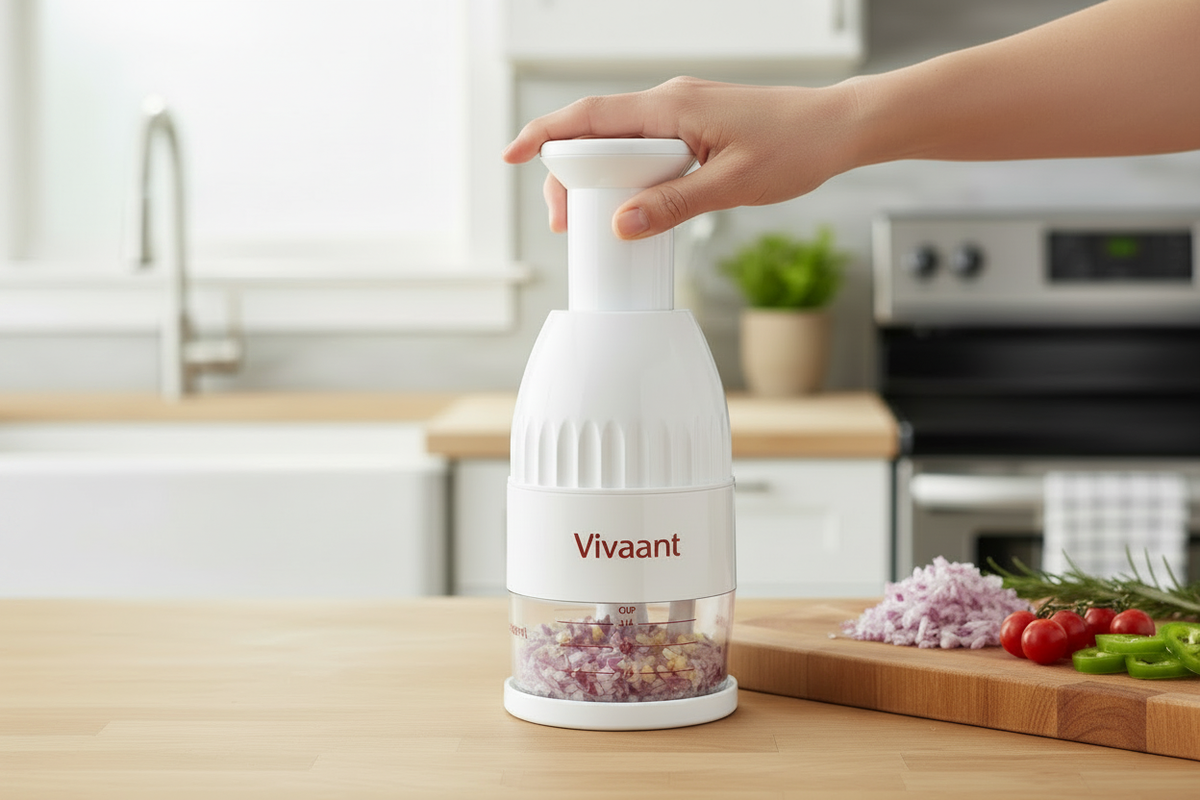
A manual food chopper can do much more than dice an onion. The real value is having a compact tool ready for the small, repetitive jobs that slow down breakfast, lunch, and dinner.
The trick is knowing which foods are a good fit and how to prepare them. Firm vegetables usually need to be cut into manageable chunks first, while softer ingredients need only a few presses. Work in small batches and stop when the texture looks right.
1. Onions
Onions are one of the best reasons to own a hand chopper. Use a coarse chop for fajitas or kebabs, a medium dice for soups and sauces, or continue pressing for a finer texture in meatballs and fillings. Cut the onion into quarters or smaller wedges before chopping.
2. Garlic
For recipes that call for several cloves, a manual chopper saves time and keeps the smell off your cutting board. Peel the cloves first, then use short rounds of chopping until they are minced to your liking.
3. Carrots
Carrots add sweetness and crunch to soups, fried rice, salads, and grain bowls. Because they are firm, slice them into smaller pieces before adding them. Chop carrots separately from soft ingredients so everything keeps the right texture.
4. Celery
Chopped celery is useful for soup bases, stuffing, tuna salad, and chicken salad. Cut long stalks into short sections first. Combine the finished celery with separately chopped onion and carrot for a quick mirepoix.
5. Bell peppers
Remove the stem, seeds, and inner ribs, then cut the pepper into chunks. A coarse chop works for omelets and sheet-pan dinners, while smaller pieces blend easily into salsa, pasta sauce, or taco filling.
6. Fresh herbs
Parsley, cilantro, basil, and other tender herbs need a light touch. Make sure they are clean and dry, avoid overfilling, and stop early. A few quick presses are usually enough for dressings, marinades, and garnishes.
7. Nuts
Chop almonds, walnuts, pecans, or peanuts for oatmeal, yogurt, brownies, salads, and crunchy toppings. Work in short bursts and check often. Too much chopping can take nuts past crumbs and toward nut butter territory.
8. Cucumbers
Remove excess seeds from very watery cucumbers, then chop them for relish, chopped salads, yogurt sauces, or salsa. Cucumbers are softer than carrots, so they usually need fewer presses.
9. Zucchini and squash
Small pieces of zucchini or yellow squash work well in omelets, soups, pasta sauces, and savory muffins. If the squash is especially watery, blot the pieces before chopping and avoid processing them too finely.
10. Hard-boiled eggs
A few gentle presses can prepare hard-boiled eggs for egg salad, sandwich fillings, or toppings. Chop eggs on their own and stop as soon as the pieces reach the size you want.
11. Homemade salsa ingredients
Chop onion, peppers, herbs, and firm tomatoes in separate batches, then combine them. Separate chopping gives you better control because each ingredient has a different texture and water content.
12. Soup and sauce starters
Many recipes begin with a handful of aromatics. Use a hand chopper for onion, carrot, celery, garlic, peppers, or herbs, then move the mixture straight to the pan. This is where a small tool can quietly save several minutes every night.
Foods that need extra care
Very hard foods, large uncut pieces, bones, and frozen ingredients may not be appropriate for a compact manual chopper. Always prepare food in manageable pieces, avoid overfilling, and keep fingers away from the blades. Follow the product’s care instructions and wash the parts thoroughly after use.
Get better results from every batch
- Cut large ingredients into smaller, similarly sized pieces.
- Chop firm and soft foods separately.
- Leave room for ingredients to move.
- Use fewer presses for a coarse chop and more for a finer mince.
- Rinse promptly so food does not dry on the parts.
The Vivaant Manual Hand Chopper uses stainless steel blades, a push-down action, and detachable dishwasher-safe parts. It is designed for the everyday ingredients that appear again and again in real home cooking.
You do not need another giant appliance taking over the counter. Sometimes the most useful kitchen tool is the one that handles twelve annoying little jobs and still fits in a drawer.
Share:
How to Care for a Chef Knife and Keep It Sharp
How to Make Zucchini Noodles Without a Bulky Spiralizer