
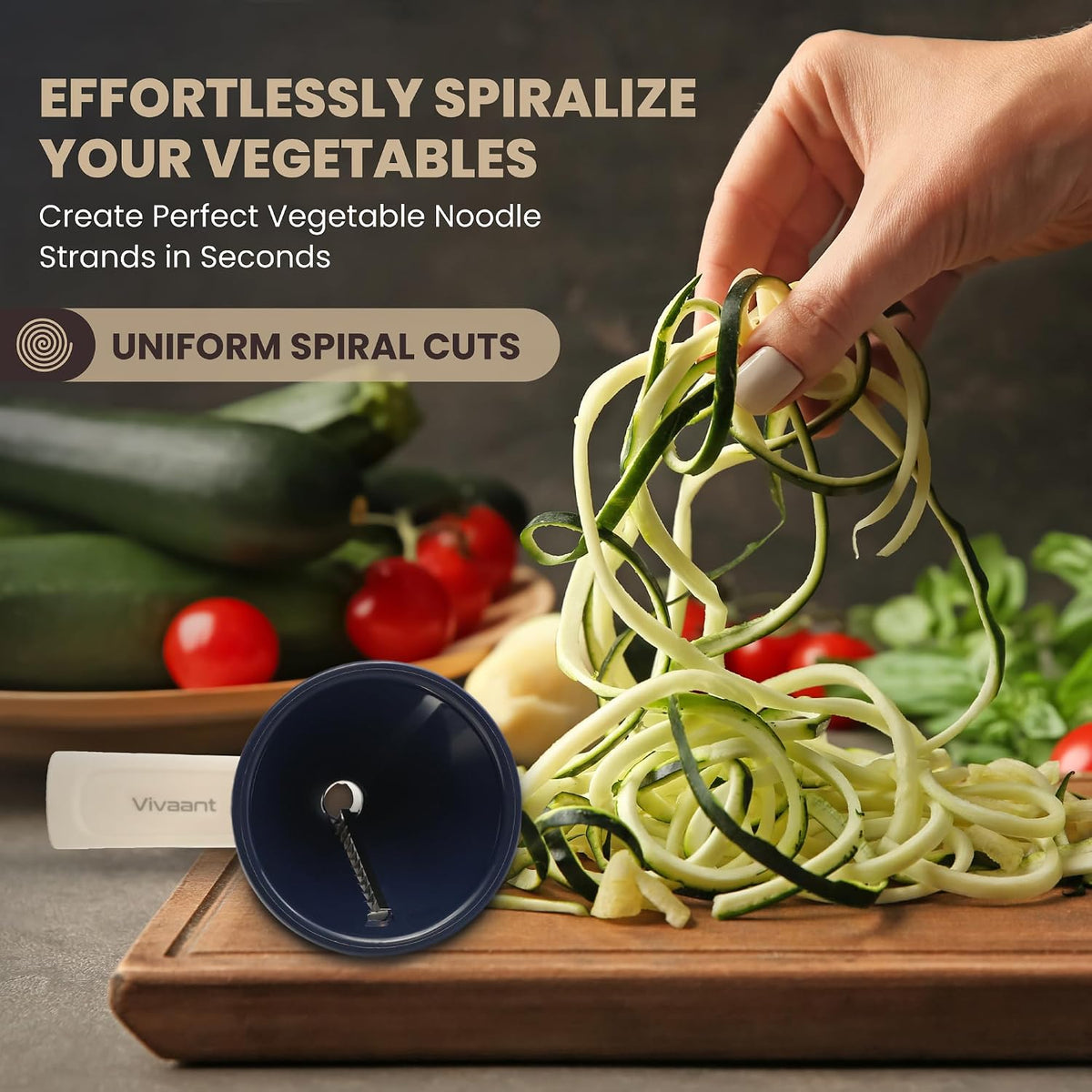
Zucchini noodles are fresh, quick, and surprisingly versatile. The part that can feel less appealing is dragging a large countertop spiralizer out of storage, assembling it, and cleaning several pieces afterward.
A compact handheld vegetable spiralizer keeps the process simple. With a few turns, firm vegetables become noodle-style strands, ribbons, and curls that can add color and texture to salads, bowls, sides, and weeknight dinners.
Choose firm, straight vegetables
For easier spiralizing, choose vegetables that feel firm and are reasonably straight. Medium zucchini and cucumbers are usually easier to handle than very wide or curved produce. Carrots should be thick enough to grip comfortably, and squash should be firm rather than soft.
Wash and dry the vegetables, then trim the ends so you have a flat starting surface. If a vegetable is too long to control easily, cut it into shorter sections.
How to make zucchini noodles
- Trim both ends of a firm zucchini.
- Hold the handheld spiralizer securely on a stable work surface or over a bowl.
- Guide the zucchini through the cutter using steady, even pressure.
- Pause if the strands become too long, then cut them into manageable lengths.
- Keep fingers safely away from the cutting components and follow the tool’s instructions.
There is no need to rush. A steady motion tends to create more consistent strands and gives you better control.
Keep zoodles from becoming watery
Zucchini naturally contains plenty of moisture. For cold salads, place the fresh noodles on a clean towel and blot them gently. For a warm dish, cook them briefly rather than treating them like wheat pasta.
A quick toss in a hot pan is often enough. Overcooking can release more water and make the strands soft. Add sauce near the end, especially if the sauce contains salt, which can draw out additional moisture.
Five easy ways to serve vegetable noodles
1. Garlic and olive oil zucchini noodles
Warm a little olive oil with garlic, toss in the zucchini noodles briefly, and finish with pepper, herbs, and grated cheese if you like. It is a fast side for chicken, fish, or meatballs.
2. Crunchy cucumber ribbon salad
Use cucumber spirals or ribbons with rice vinegar, sesame oil, herbs, and toasted seeds. Blot watery cucumbers first so the dressing stays bright rather than diluted.
3. Carrot ribbons for grain bowls
Carrot spirals add color and crunch to rice, quinoa, or noodle bowls. Pair them with cucumbers, greens, roasted vegetables, and a favorite dressing.
4. Mixed vegetable slaw
Combine spiralized carrots, cucumbers, and firm squash, then cut the strands into shorter lengths. Toss with a light vinaigrette for a fresh slaw with more texture than ordinary shredded vegetables.
5. Half pasta, half vegetables
If a full bowl of vegetable noodles is not your thing, mix them with regular pasta. You still get the comfort of pasta plus extra color, texture, and vegetables. No culinary identity crisis required.
What else can you spiralize?
The Vivaant Handheld Vegetable Spiralizer works well with zucchini, cucumbers, carrots, squash, and other firm vegetables. Different produce will create different textures, so use gentle pressure with softer vegetables and a steady grip with firmer ones.
Vegetable spirals are useful beyond noodle bowls. Try them in wraps, salads, sandwich toppings, garnishes, stir-fries, and lunch boxes. Even a simple cucumber looks a little more interesting when it arrives at dinner wearing curls.
Compact tools make experimentation easier
A handheld spiralizer stores in a drawer and does not require a complicated setup. That makes it easier to use for one zucchini, one cucumber, or a quick garnish instead of waiting for a recipe large enough to justify an appliance.
After use, wash the tool thoroughly and use caution around the cutting components. Once it is clean and stored, your counter belongs to you again.
A fresh twist on everyday vegetables
You do not need an elaborate recipe to make vegetables more appealing. A different shape can change the texture of a salad, lighten a pasta dish, or make a familiar side feel new. Start with firm produce, keep the motion steady, and avoid overcooking. The result is quick, colorful food with very little kitchen drama.
Share:
What Can You Chop in a Manual Food Chopper? 12 Useful Ideas