
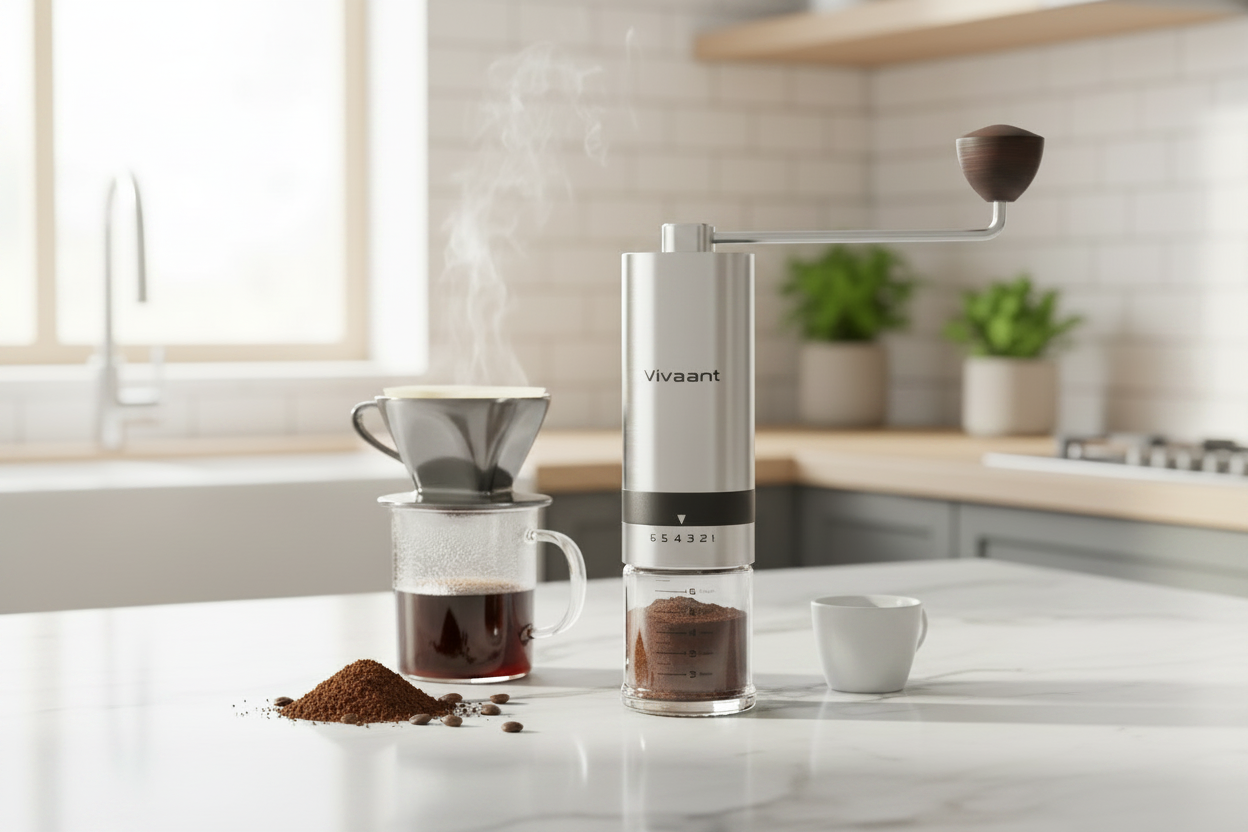
You bought a quality coffee grinder. You sourced single-origin beans. You even started saying things like "tasting notes" at brunch. And yet, your morning cup still tastes like it was brewed with regret. The culprit? Grind size. It is the single most overlooked variable in home coffee brewing, and once you understand it, everything changes.
Why Grind Size Matters More Than You Think
Coffee extraction is all about surface area and contact time. When hot water meets ground coffee, it pulls out soluble compounds, first the bright acids, then the sweetness, then the bitterness. Grind too coarse and the water rushes through without extracting enough flavor, leaving you with a weak, sour cup. Grind too fine and the water lingers too long, over-extracting the bitter compounds that make you question your life choices.
Getting grind size right means hitting that sweet spot where your brew is balanced, complex, and genuinely enjoyable. The good news: it is not complicated once you know the rules.
The Grind Size Cheat Sheet
Different brew methods call for different grind sizes. Here is a quick breakdown:
- Extra Coarse (sea salt texture): Cold brew. Long steep times need coarse grounds to avoid over-extraction.
- Coarse (kosher salt texture): French press, percolator. The metal filter lets fines through, so you want larger particles.
- Medium-Coarse (rough sand texture): Chemex, Clever Dripper. Slower pour-overs benefit from a slightly coarser grind.
- Medium (regular sand texture): Drip coffee makers, siphon brewers. The workhorse setting for most home setups.
- Medium-Fine (fine sand texture): Pour-over cones like V60 or Kalita Wave. Faster drip rates need a finer grind to slow extraction.
- Fine (table salt texture): Espresso. Tight puck, high pressure, short extraction window.
- Extra Fine (powdery): Turkish coffee. Brewed unfiltered, so the grounds need to be almost flour-like.
How to Dial In: A Step-by-Step Process
Dialing in is the process of adjusting your grind until your brew tastes exactly right. Here is how to do it systematically without losing your mind (or your beans).
Step 1: Start with a Reference Point
Use the cheat sheet above to pick a starting grind size for your brew method. Do not try to guess from scratch every time.
Step 2: Brew and Taste Critically
Take a sip and ask yourself: Is this sour and thin? That is under-extraction. Go finer. Is this bitter and harsh? That is over-extraction. Go coarser. Is this flat and papery? Check your water temperature and freshness of beans too.
Step 3: Adjust One Variable at a Time
This is where most home brewers go wrong. They change the grind AND the dose AND the water temperature all at once, then have no idea what fixed (or broke) the cup. Change only the grind size between brews. Keep everything else constant.
Step 4: Make Small Adjustments
On a manual grinder, one or two clicks of adjustment can make a noticeable difference. On an electric grinder, move one setting at a time. Patience here pays off in the cup.
Step 5: Document What Works
Write it down. Seriously. "Setting 7, 18g in, 36g out, 28 seconds" is the kind of note that saves you from starting over every Monday morning.
The Role of Your Grinder
Not all grinders are created equal. Blade grinders chop beans unevenly, producing a mix of fine powder and large chunks that brew inconsistently no matter what setting you use. Burr grinders, whether flat or conical, crush beans between two abrasive surfaces for a uniform grind size. If you are serious about your morning cup, a burr grinder is non-negotiable.
A quality manual burr grinder gives you precise control, consistent results, and a satisfying arm workout before 8 AM. It is basically a gym membership and a coffee subscription rolled into one.
Common Grind Size Mistakes (and How to Fix Them)
- Grinding too far in advance: Ground coffee goes stale fast. Grind right before brewing for the best flavor.
- Ignoring bean freshness: Even a perfect grind cannot save stale beans. Look for a roast date on the bag, not just a "best by" date.
- Skipping the purge: When you change grind settings, run a small amount of beans through first to clear out old grounds from the previous setting.
- Using the wrong grinder for espresso: Espresso requires very fine, very consistent grounds. Not every grinder can handle it. Check your grinder's specs before attempting.
Ready to Upgrade Your Grind?
The right grinder makes dialing in faster, easier, and a lot more satisfying. Browse our coffee grinders collection to find a manual burr grinder that fits your brew style and your counter space. Whether you are a pour-over purist or an espresso enthusiast, there is a grinder built for the way you drink coffee.
Your best cup is one grind adjustment away.
Share:
Handheld vs. Countertop Cheese Grater: Which One Is Right for You?
How to Care for a Chef Knife and Keep It Sharp